'

Lojong Slogan Generator

14. To see confusion as the four kayas, the protection of emptiness is unsurpassable

  • This is the Fourth Slogan/Instruction of Point Three, which consists of six instructions.
  • Point Three is “Transforming Adversity into the Path of Awakening”. 

Traleg Kyabgon:

The kayas (Tib. sku), or “aspects of Buddha’s being,” help us to maintain an enlightened perspective on our world. The nirmanakaya is the physical appearance of a Buddha’s being, the sambhogakaya is the embodiment of the wisdom qualities, and the dharmakaya is the transcendental aspect. Dharmakaya is inseparable from ultimate reality, because everything that we perceive has the nature of emptiness. Sambhogakaya represents the interconnectedness of all things, because the mental and physical are not totally independent of each other; everything that exists—good or bad, beautiful or ugly, sacred or profane—is part of the pattern of events and processes. Nirmanakaya is how we see everything that is presented to our senses as a manifestation of emptiness. Normally only three kayas are mentioned in Mahayana literature, but sometimes a fourth is included to illustrate the inseparability of these three aspects. This is called svabhavivakaya, which is not a fourth “body” so much as a unifying concept. It signifies the fact that we should not think of the physical, mental, and transcendental aspects of a Buddha’s being as three separate entities, but as an inseparable whole that is interdependently coalescent..

The Practice of Lojong: Cultivating Compassion through Training the Mind

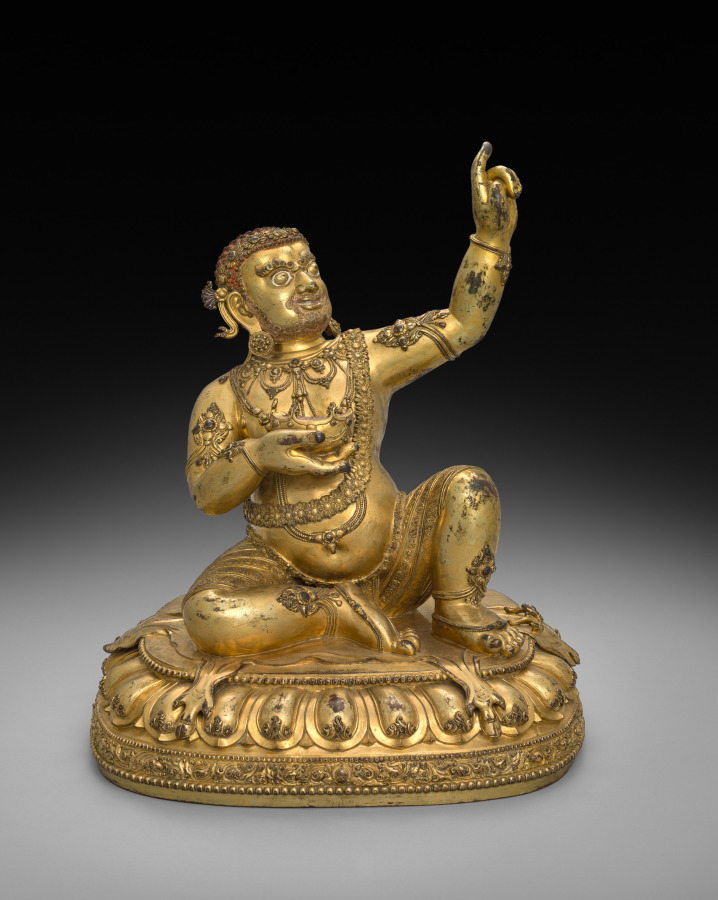
Bronze; overall: 16.4 x 13.3 cm (6 7/16 x 5 1/4 in.). The Cleveland Museum of Art

Seated Maitreya, late 7th – early 8th century. Nepal, late Gupta style, late 7th – early 8th century. Bronze; overall: 16.4 x 13.3 cm (6 7/16 x 5 1/4 in.). The Cleveland Museum of Art

Lojong Slogan Generator